


 729 Canning Hwy, Applecross WA 6153
  1300 108 133

Pterygoid and Zygomatic Implants
Pterygoid and zygomatic implants allow clients with upper jaw bone loss to restore their smile with full mouth dental implants.
Pterygoid and Zygoma Dental Implants Perth
When there isn’t enough bone in the upper jaw for standard implants, there are still options.
Pterygoid and zygomatic (zygoma) implants are advanced solutions that can be placed at the same time as full mouth dental implants—often avoiding the need for bone grafting.
At Perth Dental Implant Centre, our team uses both traditional and longer implants to support a full set of teeth.
For patients with more severe bone loss, we may work alongside a specialist oral and maxillofacial surgeon to place zygomatic implants safely.
Not sure what’s right for you?
Book a free consultation and we’ll walk you through your options.


What are Pterygoid implants?
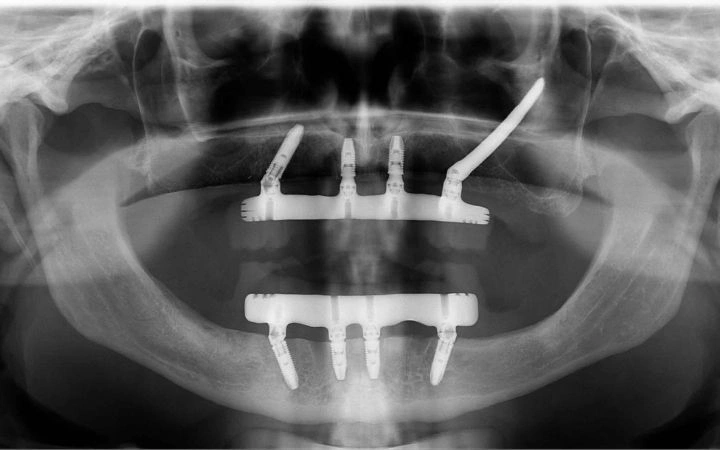
Pterygoid implants are long implants (between 15mm to 18mm in length) that are placed into the pterygoid process of the sphenoid bone, which is near the back of the upper jaw behind the jawline.
Pterygoid implants may be suitable for clients who lack enough upper jawbone for conventional length dental implants. Unlike the upper jaw bone, the sphenoid bone is highly dense and resistant to gradual bone loss over time.
What are Zygomatic Implants?
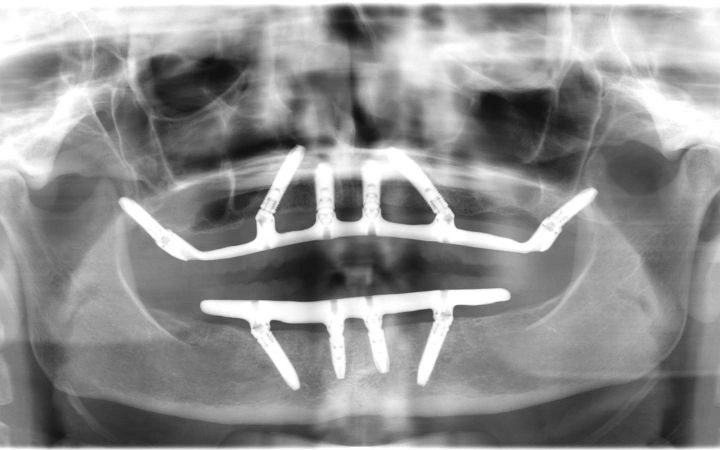
Zygomatic implants are long implants (between 35mm to 55mm in length) that extend into the zygomatic bone, which is in the upper part of the cheekbone.
Anchoring a zygomatic implant in this region provides a very strong and stable foundation to support full mouth All-on-4® dental implants in cases of severe bone loss.
Like pterygoid implants, the zygomatic bone is extremely strong and less likely to deteriorate over time.
In cases where clients have been told they are unsuitable for conventional dental implants, pterygoid and zygomatic implants may make treatment with dental implants possible.
Benefits of Pterygoid and Zygomatic Implants
1. Avoids Bone Grafting
Zygomatic and pterygoid implants avoid the need for bone grafting which reduces invasiveness, surgery time, related surgical risks and healing time of dental implants.
2. Immediate Teeth
With zygomatic and pterygoid implants, a full set of replacement teeth can be fitted within 24 hours of surgery.
3. High Treatment Success
Longer implants, including pterygoid and zygomatic implants, can be used in conjunction with the All-on-4® clinical protocol to provide additional support where bone volume is limited. These implants are designed to achieve stable, long-term outcomes, with reported high success rates of approximately 97% for pterygoid implants and 94% for zygomatic implants*.
These advanced techniques have been extensively researched and refined, offering a predictable treatment option for patients with significant bone loss or reduced jawbone quality.
4. Seamless Results
For clients with broader smiles, longer implants help to support teeth that extend further back in to the mouth—helping to minimise visible gaps for a seamless and natural look.
*Goiato, M.C., Pellizzer, E.P., Moreno, A., Gennari-Filho, H., dos Santos, D.M., Santiago, J.F. and dos Santos, E.G. (2014). Implants in the zygomatic bone for maxillary prosthetic rehabilitation: a systematic review. International Journal of Oral and Maxillofacial Surgery, 43(6), pp.748–757. doi:https://doi.org/10.1016/j.ijom.2014.01.004.
*Araujo, R., Ferreira, J., Camila Lopes Cardoso, Froy, A., Rosenvaldo Moreira Júnior and Marcos Martins Curi (2019). Clinical outcomes of pterygoid implants: Systematic review and meta-analysis. 47(4), pp.651–660. doi:https://doi.org/10.1016/j.jcms.2019.01.030.
Am I Suitable?
If you have gone without natural teeth for some time, you may not be suitable for conventional implants due to bone loss or poor bone quality in the upper jaw.
However, All-on-4® treatment using pterygoid or zygomatic implants may be an option.
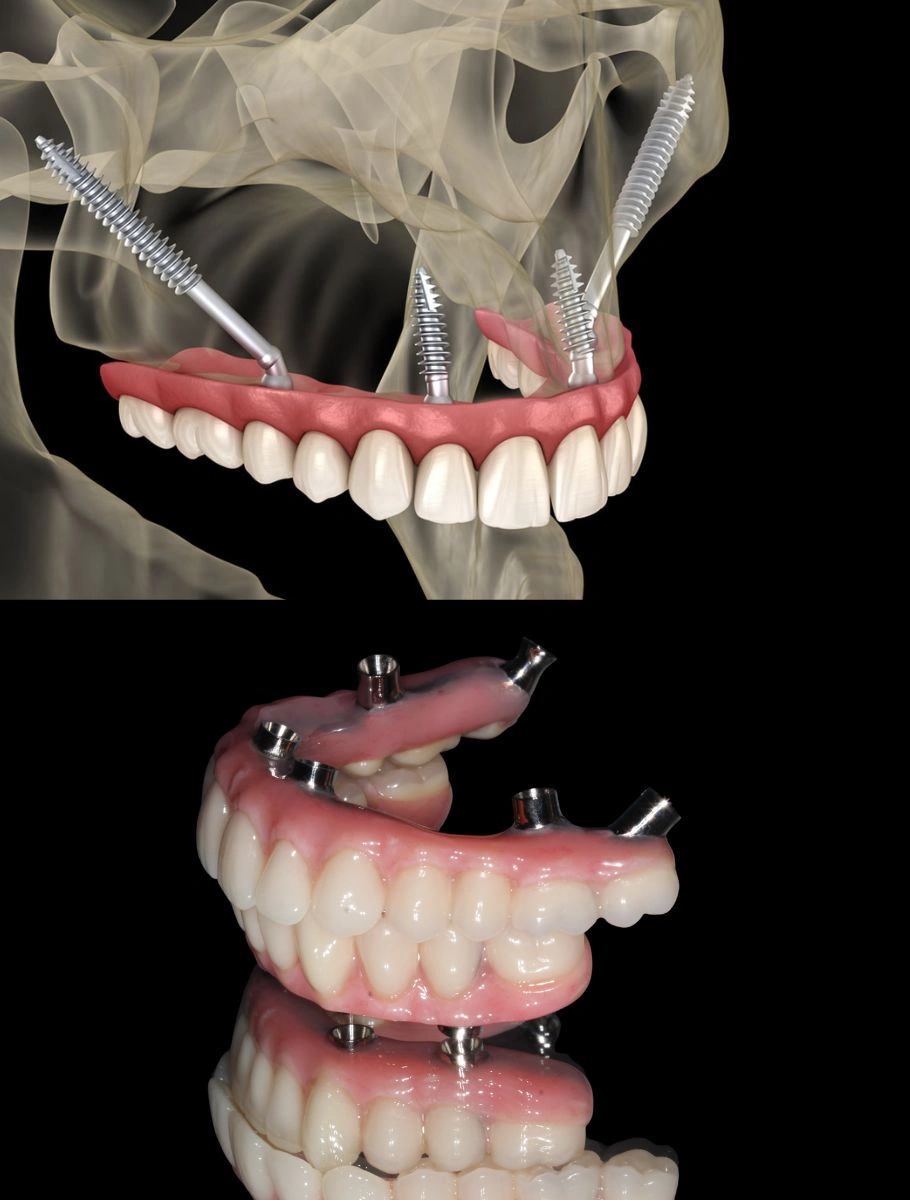
Longer implants are placed during your All-on-4 surgery. Instead of placing implants into the jaw bone, pterygoid implants are placed into the sphenoid bone while zygomatic implants are placed higher into the cheek bone.
Book a consultation with one of our implant surgeons who can take a 3D bone scan and tailor a treatment plan to help you regain a fully functioning and aesthetic smile.
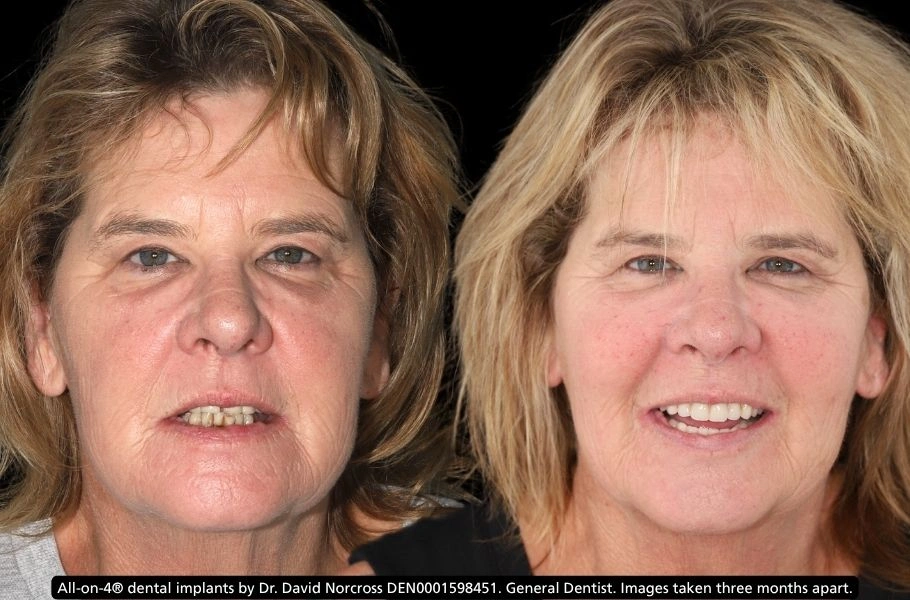
Book an All-on-4® Consultation Today
Book a complimentary consultation with one of our implant surgeons to assess your suitability for All-on-4® dental implant treatment.
Perth Dental Implant Centre is a designated All-on-4® Centre of Excellence, one of only a handful of clinics in Australia. Book online or call 1300 108 133 to book today.
Any surgical or invasive procedure carries risks. Before proceeding, you should seek a second opinion from an appropriately qualified health practitioner.

People Also Ask
-
What is your All-on-4 / full mouth dental implant payment policy?
-
What are the risks of All-on-4® dental implants?
All surgical procedures carry risk. Complications of All-on-4® implant surgery are rare when the procedure is performed by a qualified and experienced dentist, but they can include:
- Infection around the implant site (leading to implant failure)
- Temporary swelling, or bruising post-surgery (clears up within 1-2 weeks)
- Nerve injury causing numbness, tingling, or altered sensation (rare and usually temporary, although sometimes it can be permanent)
- Sinus complications (apples to implants placed in the upper arch, precautions are taken to manage sinus complications)
- Implant failure or loosening (if the bone does not heal properly)
- Damage to surrounding teeth or gums
- Delayed healing time in some patients
We’ll make sure you understand the possible risks before you consent to treatment.
-
What is the All-on-4® process?
-
Who is a candidate for pterygoid and zygomatic implants?
Clients who have gone without teeth for some time will experience a degree of bone loss.
Zygomatic and pterygoid implants may be recommended to clients with insufficient upper jawbone quality or quantity to increase the likelihood of treatment success.
Before zygomatic and pterygoid implants were widely adopted, a bone grafting procedure would have been needed to build up the jaw in preparation for full mouth dental implants.
-
What is the success rate for pterygoid and zygoma implants?
Zygomatic implants have a documented success rate of 97.86% over a 36-month follow-up period.
(1). Goiato, M.C., Pellizzer, E.P., Moreno, A., Gennari-Filho, H., dos Santos, D.M., Santiago, J.F. and dos Santos, E.G. (2014). Implants in the zygomatic bone for maxillary prosthetic rehabilitation: a systematic review. International Journal of Oral and Maxillofacial Surgery, 43(6), pp.748–757. doi:https://doi.org/10.1016/j.ijom.2014.01.004.
Pterygoid implants have shown a 94% success rate across a number of studies.
(2) Araujo, R., Ferreira, J., Camila Lopes Cardoso, Froy, A., Rosenvaldo Moreira Júnior and Marcos Martins Curi (2019). Clinical outcomes of pterygoid implants: Systematic review and meta-analysis. 47(4), pp.651–660. doi:https://doi.org/10.1016/j.jcms.2019.01.030.
-
How long does All-on-4 surgery take with pterygoid or zygomatic implants?
Surgery time depends on individual case complexity. In general, All-on-4 surgery may take about four hours on average, or an hour per dental implant. Placing a longer dental implant may take only slightly longer, again depending on the level of complexity.
-
What are the benefits of pterygoid and zygomatic implants?
Pterygoid and zygomatic dental implants make implant treatment possible for patients who have gone without teeth for some time and as a result, have suffered severe upper jawbone loss.
Some benefits of implant treatment with pterygoid or zygomatic implants include:
- Avoid bone grafting
- Immediate teeth
- Increased treatment success
- Aesthetically-pleasing
-
What are pterygoid dental implants?
Pterygoid implants are longer than conventional implants and used in cases where there isn’t enough bone density or height in the upper jaw (maxilla) to hold new teeth in place. Pterygoid implants are inserted in the back of the mouth behind the jawline and extend into the pterygoid process of the sphenoid bone. This region of bone is very strong and stable.
-
What are zygomatic dental implants?
Zygomatic dental implants are longer than conventional implants and used in cases where there is not enough upper jawbone quality or quantity to support new teeth. These implants are angled and inserted into the upper cheek or zygomatic bone, providing a very strong and reliable foundation to support teeth. They are often used in combination with conventional dental implants in All-on-4 surgery.
Dr Norcross may consult with a specialist oral maxillofacial surgeon for the placement of zygomatic implants.

Book a Free Consultation
We provide high-quality treatment at competitive prices with our highly experienced dentists. Find out if dental implants are right for you. Book your free consult & 3D scan today. T&Cs apply.
 All-on-4® Download e-Book