729 Canning Hwy, Applecross WA 6153
  1300 108 133


Immediate Implants
If you have a damaged or decayed tooth, it may be possible to remove and replace it with an immediate implant on the same day.
Immediate Implants in Perth
Immediate dental implants are designed to fast-track treatment and healing processes, instantly restoring your smile while supporting oral health and preserving your jawbone.
An immediate dental implant offers stability and long-term jaw support, without relying on neighbouring teeth or suction to remain secure.
Book a consultation to determine whether dental implants are suitable for you.
Considering full-arch replacement with All-on-4®? Learn more here.
Why Consider Immediate Implants?
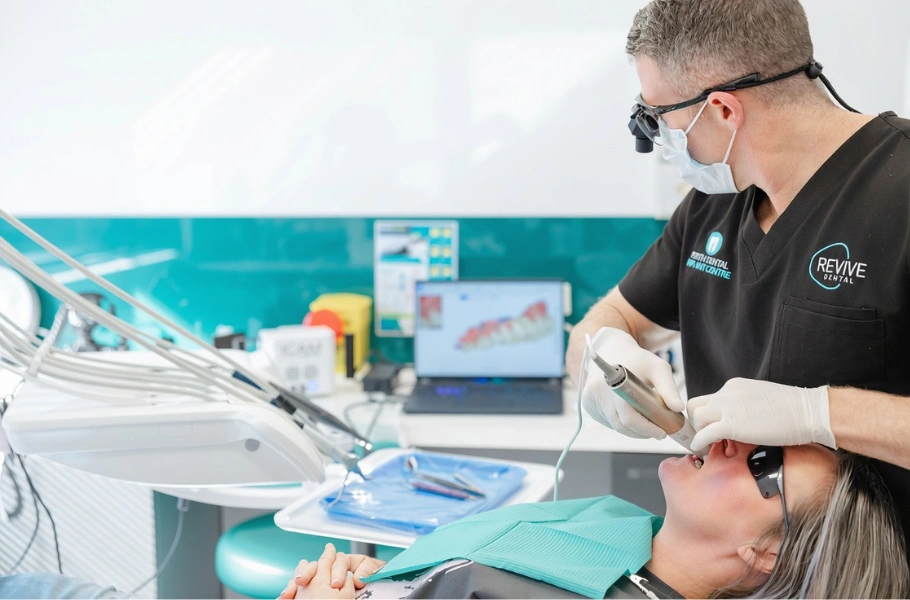
If a tooth needs to be extracted, replacing it with a dental implant on the same day can help maintain the appearance of your smile and reduce the challenges often associated with temporary tooth loss — such as difficulty eating or speaking, shifting teeth, and early jawbone loss.
Compared to a staged-implant treatment approach (where the tooth has already been missing for some time), immediate implants can offer several advantages including:
- Tooth removal and replacement on the same day
- Fewer appointments
- Streamlined treatment timeline
- Reduced overall disruption to your schedule

Who Is Suitable for Immediate Implants?
We examine your mouth and jaw, take a 3D scan and check your medical history to confirm your suitability for an immediate implant.
Do You Meet These Requirements?
- Enough bone volume and density to support an implant
- Good oral hygiene and gum health
- Non-smoker or willing to stop
A dental implant is immediately placed following the removal of the unwanted tooth and is covered with a temporary crown until the mouth heals.
If you’re having all of your remaining upper or lower teeth removed, we may recommend All-on-4® dental implants which replaces an entire arch within a day of surgery.

Immediate Implant Procedure
Removing a tooth and replacing it with an immediate dental implant is typically completed in a single appointment. After your mouth has healed, a follow-up visit is scheduled to replace your temporary crown with your final, permanent crown.
Most of the planning happens well before your surgery. Using a 3D CBCT scan, your dentist carefully maps out the exact position of your implant, ensuring important structures such as nerves and the sinus are avoided.

What to Expect
Dental implant surgery at Perth Dental Implant Centre is typically performed under local anaesthetic. For anxious patients we also offer the following sedation options:
- Oral sedation
- Sleep dentistry (IV sedation)
- General anaesthesia
Oral sedation in tablet form may be suitable for some clients while IV sedation (sleep dentistry) is recommended for very anxious clients. IV sedation is administered at the clinic by a qualified anaesthetist:
- The failing tooth is carefully removed
- A dental implant is placed
- A temporary crown is connected to the implant with an abutment
- Over the following three to six months, the implant bonds with the jawbone, forming a strong foundation
- A permanent crown replaces the temporary crown
If the tooth being replaced is at the front of the mouth, we will attach a temporary crown on the same day.
If there isn’t enough jaw bone to support a dental implant, we may recommend a bone graft to build it up, this is done during your surgery.

Book a Consultation Today
If you want to know more about replacing teeth with dental implants, or you’re ready to take the next step, get in touch today.
Call on 1300 108 133 to arrange your initial consultation with one of our implant dentists to discuss immediate implant placement in Perth and other options.

People Also Ask
-
How long does the procedure for immediate dental implants take?
-
How much do immediate dental implants cost?
Immediate dental implants may cost more than a standard dental implant as it involves a slightly more complex procedure involving an extraction of your existing tooth.
It may also be necessary to place a bone graft into the empty tooth socket surrounding the implant if there isn’t enough jaw bone to support it. However, the advantages are that the procedure is carried out in just one visit that aids faster healing time with minimal bone loss.
Our dentists in Applecross will make sure you understand the costs involved before you commit to immediate dental implants.
-
Am I suitable for immediate dental implants?
You may be a candidate for immediate dental implants if your jaw is large and strong enough to support an implant and you don't have an oral health problem such as gum disease. An immediate implant can replace a tooth that's been extracted due to damage, decay or for other reasons.
-
How long does a dental implant last?
A dental implant can last 20 years or longer, and in many cases a lifetime, when placed by an experienced clinician and properly maintained. The implant itself (titanium post) is designed to be long-term, while the attached crown or bridge may need replacement over time.
How long do dental implant crowns last?
- Ceramic crown or bridge: typically lasts 5–15 years
- Lifespan depends on the material used, bite forces, and how well you care for your teeth
What affects how long dental implants last?
Dental implants are both biological and mechanical, meaning their longevity can vary based on:
- Oral hygiene: Daily cleaning and regular professional maintenance
- Bone health: Changes in jawbone density over time
- Bite forces: Grinding or clenching can increase wear
- Smoking and health factors: Can impact healing and long-term success
- Clinician experience: Careful planning and precise placement are critical
What is the success rate of dental implants?
Dental implants have been extensively studied and show a high long-term success rate of around 95% to 98% over many years in healthy, non-smoking patients.
Do dental implants need to be replaced?
- Implant (titanium post): Designed to last decades or longer
- Crown or bridge: May need replacement after 5–15 years due to normal wear
Some patients may require earlier replacement depending on individual factors.
How can you make dental implants last longer?
- Maintain good oral hygiene at home
- Attend regular check-ups and professional cleans
- Follow your dentist’s aftercare advice
- Address issues like grinding early
Quick summary
- Dental implants can last 20+ years or longer
- Success rates are high (95%–98%)
- Crowns and bridges typically last 5–15 years
- Long-term success depends on care, health, and maintenance
-
What are the risks with dental implant treatment?
Success rates for dental implant treatment in Australia is very high at 90-98%, according to the Australian Dental Association (ADA). Dental implant treatment completed overseas doesn’t always follow the same success and we often treat patients with failed implants. Read more about dental implants overseas. Dental implant treatment risks may include:
- Speech problems
- Gum tissue growth
- Infection
- Bone loss
- Loose implant
- Loose tooth
- Tooth problems
General surgical risks and specific risks to implant surgery also apply and are discussed with you prior to treatment. Careful planning and precision surgery by a suitably qualified dentist is essential to minimising any risks of surgery.
Book a Free Consultation
We provide high-quality treatment at competitive prices with our highly experienced dentists. Find out if dental implants are right for you. Book your free consult & 3D scan today. T&Cs apply.
 All-on-4® Download e-Book