


 729 Canning Hwy, Applecross WA 6153
  1300 108 133


Are Overseas Dental Implants Safe?
 June 15, 2021
3-minute read
If you’re missing any teeth, or need to have damaged or unhealthy teeth removed, there are several options for filling the gap and restoring your smile. With their greater stability and longevity, dental implants can be the most effective long-term solution for replacing missing teeth, but they’re also a considerable investment.
If the cost of dental implants is outside of your price range, you might be considering going abroad to have the treatment cheaper. Flying to countries such as Thailand or Indonesia to have fillings, crowns and other treatments could save you money, but when it comes to more complex surgical procedures such as dental implants, you need to be aware of the risks involved.

These images illustrate one of our patients who had dental implants completed in Bali in 2017. Since then, he has been hospitalised three times with infections. A number of factors combine to cause implants to fail. The main reasons can be poor planning, poorly executed surgery and poor design of teeth. In this case, the cheap materials used to make the teeth on the dental implants played a large part in implant failure. The teeth did not fit well, had gaps around them making them impossible to clean and there was cement left around the gums after they were fitted.
What are the risks of overseas dental implants?

The Australian Dental Association (ADA) and other health organisations discourage the practice of dental tourism, especially for surgical procedures where there are more chances for things to go seriously wrong. Overseas implant treatments can be risky due to:
- Lower standard of care and implant quality
- Lower hygiene standards
- Higher risk of complications
- No support if things go wrong
Read more about these risks below and talk to your dentist for their professional advice so you can make an informed decision about your dental treatments.
Lower standard of care and implant quality

In Australia, the dental industry is strictly regulated for the safety and wellbeing of patients. Dentists must register with the Dental Board of Australia and may apply for QIP accreditation for their clinic to reassure patients that they are in safe hands.
Some overseas dentists will have the skills and experience necessary to provide safe implant treatments, but it can be hard to know whether you’re dealing with a suitably qualified practitioner if the industry is held to less stringent standards.
Even a qualified dentist is only as good as their tools. Dental implant materials and other instruments used in Australia must meet relevant Australian Standards and can be approved by the Australian Dental Association (ADA). Overseas dental implants may be made from lower quality materials and be more prone to damage or failure. You may also have little to no information about the dental implant brands used.
Read the ABC story on dental tourism
Lower hygiene standards
Hygiene practices may also be less strict at overseas dental clinics compared to Australia. The dental implant procedure involves oral surgery, which requires a high standard of infection control to keep dental instruments, materials and surroundings sterile to lower the risk of infections.
Hygiene should be even more of a prioritising factor in the wake of the COVID-19 pandemic, and you need to be confident that the dental clinic is taking all steps to protect you, so you won’t bring an infection home. The rise of antibiotic-resistant ‘superbugs’ in Australia in recent years is thought to be partly due to Australians travelling abroad for health services in clinics that don’t follow the necessary infection control measures.
Higher risk of complications

The short-term nature of overseas dental visits is a poor match for implant treatments, which routinely involve a series of appointments over a number of months to give the mouth time to heal. Unfortunately, time is a luxury that most patients don’t have when taking trips abroad, and this often leads to the treatment timeline being accelerated, increasing the risk of implant failure and complications.
Taking flights shortly after surgery is not advised, due to risk of developing a blood clot. This can mean having to compress your treatment timeline even further. If you need additional treatments, such as a bone graft or sinus lift before implants can be placed, these will likely require a separate trip, which all adds to your total treatment cost.
All surgical procedures carry risks, but these can be minimised when your treatment is handled by a dentist who is highly experienced with placing implants and who prioritises your safety. Your dentist should give you a thorough oral health assessment before starting any implant treatment and they should have the expertise to detect problems such as gum disease that should be treated before other procedures can begin.
No support if things go wrong
If something does go wrong during or after your implant treatment overseas, you may not have any recourse to make a complaint or claim compensation as you would when visiting an Australian dentist. Your treatment abroad is unlikely to be covered by insurance, and travel agents make sure to absolve themselves of responsibility by not underwriting any specific clinics.
If you need additional corrective treatments due to complications from your implant procedure, or even a replacement implant, you may be faced with the choice of returning to your overseas dentist or visiting your local dentist in Australia (If the implant brand and parts are TGA-approved for use, that is). Either way, the cost of corrective surgery works out more expensive in the long run than if you’d stayed at home initially.
How to save money on dental implants
Going abroad isn’t the only way to lower your dental implant cost. Your dentist will explain the cost breakdown during your free implant consultation including an estimate of follow-up appointments and any ongoing cleaning and maintenance of your dental implants, so you know exactly what to expect when you get your invoice.
Dental clinic staff can help you to check with your health fund how much of your treatment can be claimed on insurance. They may also offer payment plans to help you break down the implant cost into smaller payments, so you don’t have to pay a lump sum. Perth Dental Implant Centre offer flexible and payment plans with Zip Humm and Pretty Penny Finance.
If you’re not sure whether dental implants are for you, your dentist can also discuss dental implant alternatives such as a dental bridge or dentures. These alternative treatments typically cost less than full mouth dental implants. See our guide for dental implant pricing.
Whether you prefer to have dental implants in Perth or overseas, it’s always a good idea to look into your dentist’s background and experience so you can get an idea of their expertise. You should also take the opportunity to ask questions about your treatment to check that the dentist and their clinic aren’t cutting corners and risking your health and safety.
Talk to an experienced dentist about implants

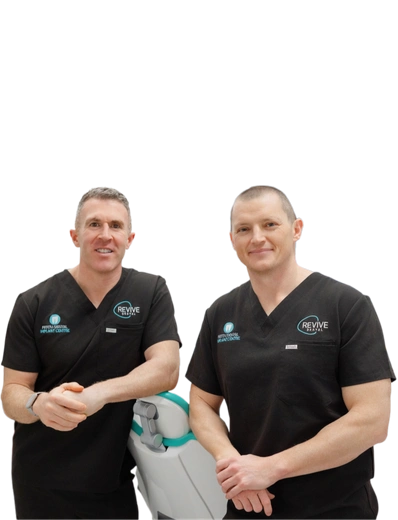
Dr David Norcross and Dr David O'Dowling both have extensive experience in advanced dental implant treatment, with a strong focus on full arch rehabilitation and fixed full mouth dental implants.
Dr Norcross has undertaken extensive international training in implant surgery and has trained alongside experienced implant clinicians throughout Australia, the UK and the US. He is a key opinion leader for Nobel Biocare, the developers of the All-on-4® treatment concept, and regularly provides implant education, mentoring and live surgical training for dentists.
Dr O’Dowling graduated from University College Cork in Ireland in 2006 and received awards in both oral surgery and restorative dentistry. After developing a strong interest in implant dentistry early in his career, he completed a Master of Science in Oral Implantology through Goethe Dental School in Frankfurt, researching the precision of 3D-printed surgical guides for implant placement.
He holds Diplomate status with the International Congress of Oral Implantologists and the American Board of Oral Implantology/Implant Dentistry, and is also a Fellow of the American Academy of Implant Dentistry. His clinical interests include advanced implant surgery, full arch dental implants, bone grafting, sinus augmentation and digitally guided implant workflows.
As one of only a select number of All-on-4® Centres of Excellence in Australia, Perth Dental Implant Centre has significant experience in complex full arch implant treatment. Although our clinicians are highly trained in All-on-4® concepts using genuine Nobel Biocare implants, treatment is tailored using a range of implant systems and advanced surgical approaches to suit each patient’s needs, anatomy and long-term treatment goals.
To arrange a consultation, call 1300 108 133 or book an appointment online.
References
- Australian Dental Association. Australia’s dentists issue warning about “dental tourism” [Online] 2017 [Accessed October 2020] Available from: https://www.ada.org.au/News-Media/News-and-Release/Media-Releases/Australia%E2%80%99s-dentists-issue-warning-about-dental-t
- Healthdirect. Dental implant procedure [Online] 2019 [Accessed October 2020] Available from: https://www.healthdirect.gov.au/dental-implant


Book a Free Consultation
We provide high-quality treatment at competitive prices with our highly experienced dentists. Find out if dental implants are right for you. Book your free consult & 3D scan today. T&Cs apply.