729 Canning Hwy, Applecross WA 6153
  1300 108 133


Several Teeth Implants
If you’re missing several adjacent teeth, a fixed implant bridge using two or more implants can fill the gap to restore your smile and help you maintain your oral health.
Replace Multiple Missing Teeth
A fixed implant bridge is more stable than a conventional bridge and won’t require natural teeth on either side of the gap to be filed down before anchoring the bridge in place.
Dental implants can also help preserve your existing teeth and prevent bone loss in your jaw.
Whether you need to replace several or all missing teeth, book a consultation at one of our dedicated implant clinics to find out if a fixed implant bridge is right for you.
Our highly accredited dentists have decades of combined experience placing dental implants and can help you choose the most suitable treatment option to restore and protect your smile.
Several Teeth Implants
Missing teeth affect your smile and can also affect your ability to chew and speak normally.
Without enough support, teeth on each side of the gap may start to shift, leading to teeth alignment issues and the opposing tooth on the opposite jaw can over-erupt into the gap.
These risks are more likely if several teeth are missing and the gap is larger. There may also be a risk of bone loss in the jaw when it’s no longer stimulated by tooth roots.
A fixed implant bridge replaces several missing teeth in a row, and is a more affordable and convenient alternative to replacing each tooth with an implant. The number of dental implants needed to support a bridge depends on:
- Number of missing teeth
- Position in the mouth
- Jaw bone quality and density
For example, if you need an implant bridge of three or four teeth replaced, this would normally only require two dental implants.

Choosing a Fixed Implant Bridge
A dental bridge supported by dental implants has many advantages over a traditional bridge or partial denture.
However, it can cost more than a traditional bridge or denture and comes with general surgical risks.
Advantages of a Fixed Implant Bridge
- Look, feel and function just like natural teeth
- Provide greater stability for a bridge
- Stimulate the jawbone preventing bone loss
- Prevent hollowed cheeks and prematurely aged appearance
- May help prevent gum recession
- Provide stronger biting forces
- Allow you to enjoy a wider more nutritional diet
- Stops natural teeth from shifting and causing misalignment issues
- Don’t rely on the health of adjacent natural teeth
- Don’t require the cutting and reshaping of adjacent healthy teeth
Disadvantages of a Fixed Implant Bridge
- Requires surgery with general surgical risks
- Higher treatment costs compared to dentures or bridges
- Higher maintenance and repair costs compared to dentures or bridges
Fixed implant bridges start from $7,800 for a 3-unit bridge with two implants.

Fixed Implant Bridge Process
The treatment process for replacing a few missing teeth using a fixed implant bridge is similar to the single dental implant treatment process, however instead of designing a single tooth, a ceramic fixed bridge often made of zirconia is manufactured by the ceramist.
1. Consultation & 3D Planning – We begin with a comprehensive consultation, using advanced 3D diagnostics to design a personalised treatment plan aligned with your goals.
2. Precision Implant Placement – We place your dental implants with expert precision, comfort and long-term stability.
3. Healing & Integration– Your implant naturally bonds with your jawbone, creating a secure and durable foundation for your new teeth.
4. Custom Crown Design – We capture high-resolution digital scans to expertly design a bespoke bridge that complements your smile.
5. Final Fit & Smile Reveal – We carefully fit and shade-match your custom-crafted bridge for seamless functionality and aesthetics.
6. Ongoing Care & Maintenance – We monitor your implant and bridge with regular reviews and provide professional maintenance to protect your long-term results.

Consultation & 3d Planning

Precision Implant Placement

Healing & Integration

Custom Bridge Design

Final Fit & Smile Reveal

Ongoing Care & Maintenance
Full Arch Dental Implants (All-on-4®)
Fixed implant bridges can also replace a full set of teeth, known as full mouth dental implants or All-on-4®.
Full mouth dental implants restore a smile using between four to six dental implants, depending on jaw bone quality and allow a full arch of teeth to be replaced within 24 hours of surgery.

Book a Free Consult Today
Call our team and book your free consult & scan to if dental implants are right for you.

People Also Ask
-
Will I get to choose my new teeth?
-
How much does a fixed implant bridge cost?
Dental implant costs can vary according to the number of teeth you're replacing, if you require tooth extractions, sedation, bridge materials and other factors.
Fixed implant bridge to replace several missing teeth prices at Perth Dental Implant Centre start from $7,800 for two dental implants, two abutments and a fixed bridge consisting of three teeth.
A full arch fixed implant bridge, also known as full mouth dental implants (All-on-4) starts from $17,250 per arch.
-
What are fixed implant bridges made of?
Fixed implant bridges are natural looking and are made using a combination of bridge materials. Perth Dental Implant Centres provides single tooth implants and fixed small implant bridges using full contour (monolithic) zirconia.
A zirconia bridge attaches to high-grade titanium dental implants.
Fixed implant bridges (also known as All-on-4®, full arch or full mouth dental implants) replace all missing teeth are made of custom-milled PMMA (acrylic) as the first set of teeth placed after surgery.
A zirconia bridge may replace a custom-milled PMMA (acrylic) bridge from three to four months after surgery. A custom-milled PMMA (acrylic) bridge may last between 1 and 2 years before needing to be replaced, while a zirconia bridge may last up to 18 years or more with proper care.
-
What is the fixed implant bridge process?
Our process for a fixed full mouth dental implant bridge (also known as All-on-4®) involves a free implant consultation with your dentist, 3D scan and clinical photographs of your mouth to plan implant treatment, followed by surgery where implants are placed into the bone.
If bone grafting is needed to support your new bridge, it will be done during surgery.
Within 24 hours, we attached your custom-milled PMMA (acrylic) bridge to your dental implants, which are left to heal over three to four months.
We provide you with care instructions for your new teeth and arrange review appointments at two weeks and four weeks after surgery. You may choose to upgrade to a long-term zirconia bridge after this time or keep your first bridge for a little longer.
Smaller fixed bridges that replace fewer teeth generally follow the same process as single tooth implant treatment.
Keen to know more? Book a free consultation to see if dental implants are right for you.

-
Who is suitable for a fixed implant bridge?
Most patients with healthy and sufficient jaw bone can be suitable candidates for a fixed implant bridge. However, if you don't have enough healthy jaw bone to support dental implants, you could still be suitable for treatment. During your consultation, Dr Norcross will take a bone scan and discuss bone grafting to help build up enough bone to anchor dental implants in place. A bone graft can be done prior to or during dental implant surgery, depending on your individual needs.
Book an examination with Dr Norcross to discover whether you’re a candidate for fixed implant bridges, call 1300 108 133 to book at our Applecross clinic or send us an enquiry.
-
What are the benefits of dental implants?
Dental implants are the closest thing to natural teeth and can be considered for replacing one, several or all missing teeth. They’re often the preferred option for restoring missing teeth.
- A fixed and long-term solution
- Look and function just like natural teeth
- Maintain your bite by stopping remaining teeth from moving
- Allow you to chew food properly
- help prevent hollowed cheeks and prematurely aged appearance
- Stimulate the jaw bone and maintain bone structure
- Provide superior stability, durability, function, comfort and aesthetics
Learn more about the consequences of tooth loss and the benefits of dental implants here.
-
How long do fixed implant bridges last?
How long a fixed implant bridge lasts depends on the materials they are made from, how well they are cared for and any lifestyle habits (such as grinding or smoking) they may break or stain them.
Custom-milled PMMA (acrylic) bridges are placed 24 hours after All-on-4 or full mouth dental implant surgery, and typically need replacing after 1 to 2 years on average.
Clients can choose to upgrade to a longer-lasting zirconia bridge around three to four months after surgery. Zirconia is highly aesthetic, durable and stain-resistant in nature and is designed to last long-term. Zirconia bridges may need replacing after up to 18 years or more, however both bridge material options have been known to last longer.
The price of full mouth dental implants starts from $17,250 per arch.
-
How long does a dental implant last?
A dental implant can last 20 years or longer, and in many cases a lifetime, when placed by an experienced clinician and properly maintained. The implant itself (titanium post) is designed to be long-term, while the attached crown or bridge may need replacement over time.
How long do dental implant crowns last?
- Ceramic crown or bridge: typically lasts 5–15 years
- Lifespan depends on the material used, bite forces, and how well you care for your teeth
What affects how long dental implants last?
Dental implants are both biological and mechanical, meaning their longevity can vary based on:
- Oral hygiene: Daily cleaning and regular professional maintenance
- Bone health: Changes in jawbone density over time
- Bite forces: Grinding or clenching can increase wear
- Smoking and health factors: Can impact healing and long-term success
- Clinician experience: Careful planning and precise placement are critical
What is the success rate of dental implants?
Dental implants have been extensively studied and show a high long-term success rate of around 95% to 98% over many years in healthy, non-smoking patients.
Do dental implants need to be replaced?
- Implant (titanium post): Designed to last decades or longer
- Crown or bridge: May need replacement after 5–15 years due to normal wear
Some patients may require earlier replacement depending on individual factors.
How can you make dental implants last longer?
- Maintain good oral hygiene at home
- Attend regular check-ups and professional cleans
- Follow your dentist’s aftercare advice
- Address issues like grinding early
Quick summary
- Dental implants can last 20+ years or longer
- Success rates are high (95%–98%)
- Crowns and bridges typically last 5–15 years
- Long-term success depends on care, health, and maintenance
-
What are the risks with dental implant treatment?
Success rates for dental implant treatment in Australia is very high at 90-98%, according to the Australian Dental Association (ADA). Dental implant treatment completed overseas doesn’t always follow the same success and we often treat patients with failed implants. Read more about dental implants overseas. Dental implant treatment risks may include:
- Speech problems
- Gum tissue growth
- Infection
- Bone loss
- Loose implant
- Loose tooth
- Tooth problems
General surgical risks and specific risks to implant surgery also apply and are discussed with you prior to treatment. Careful planning and precision surgery by a suitably qualified dentist is essential to minimising any risks of surgery.
-
What is a fixed implant bridge?
A fixed implant bridge is a row of prosthetic teeth (known as a bridge) supported and stabilised by dental implants placed in the jaw bone. Dental implants behave like tooth roots helping to preserve jaw bone and facial structure and supporting surrounding natural teeth. A fixed implant bridge is permanently attached to your implants can only be removed by your dentist.
Book a Free Consultation
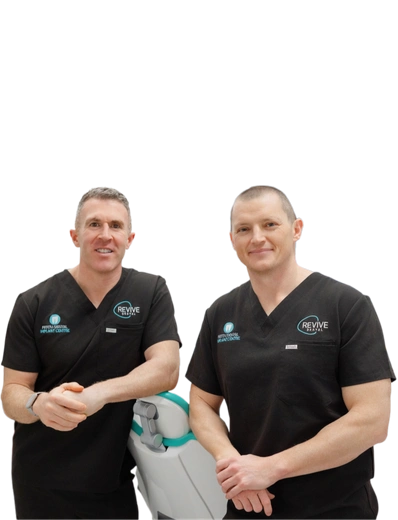
We provide high-quality treatment at competitive prices with our highly experienced dentists. Find out if dental implants are right for you. Book your free consult & 3D scan today. T&Cs apply.
 All-on-4® Download e-Book